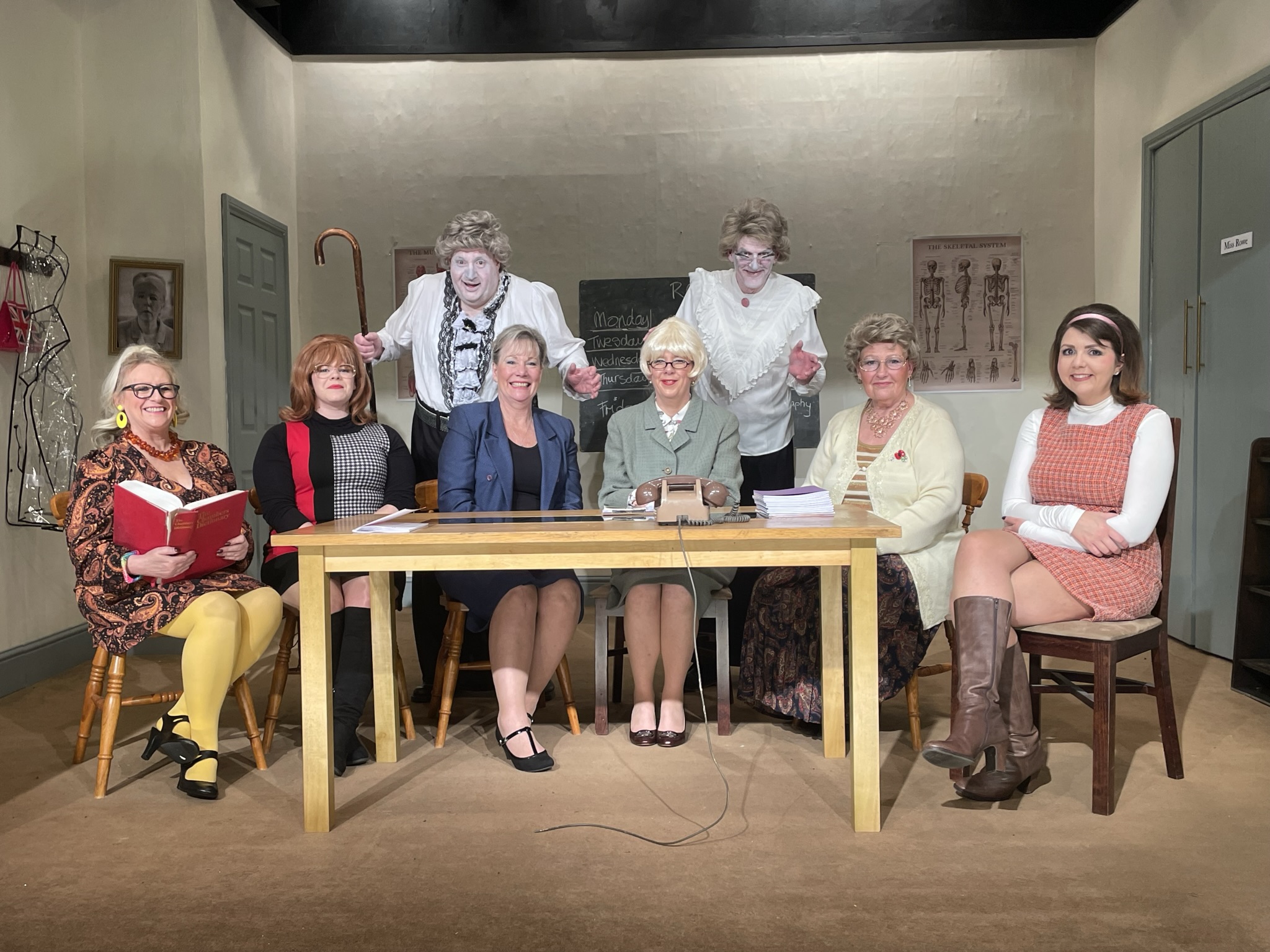
Georgina Reid’s comedy Ladies of Spirit is set in the somewhat decaying world of Gibraltar School, a private girls’ institution founded by the formidable Misses Pye, now deceased. According to the published synopsis, the school has since fallen under the rule of the tyrannical headmistress Miss Rowe, universally known as “Hard Rowe”, whose regime, along with unruly pupils and a weary staff, makes daily life a quiet endurance test for the teaching staff. Help arrives, however, from an unexpected supernatural source, as the spirits of the founding sisters return to intervene in school affairs, bringing mischief, justice, and long-overdue disruption to the status quo.
At its heart, the play blends ghostly comedy with schoolroom satire, using the contrast between rigid authority and playful spiritual intervention to explore themes of legacy, institutional dysfunction, rebellion, and female solidarity across generations. The presence of the Pye sisters’ ghosts gives the story both its comic edge and its moral backbone: the past quite literally refuses to stay buried when the present has gone astray.
Performance Review
Your production brought out the ensemble nature of Reid’s writing effectively, with each character contributing to the wider portrait of a school teetering between order and chaos.
Keith Irons as Miss Harriet Pye and Peter Storr as Miss Matilda Pye provided a strong spectral anchor for the piece. Their performances balanced warmth and authority well, capturing the slightly mischievous, “unfinished business” quality of the founding headmistresses. Their ghostly presence never overshadowed the living characters, but instead gently steered the moral centre of the play.
Alison Ivanec’s Miss Rowe (“Hard Rowe”) was a commanding and sharply defined antagonist. Her portrayal leaned confidently into the character’s authoritarian rigidity, giving the staffroom conflict real dramatic weight and providing a clear counterpoint to the more whimsical elements of the piece.
The supporting staff ensemble added texture and pace.
- Maria Lowcock as Sally Burgess delivered a well-judged comedic performance, capturing the secretary’s scatterbrained charm without losing clarity in the busy dialogue.
- Lissy Rawlings as Mrs Thorpe (and Mrs Emmett) showed strong range in switching between weary resignation and emotional exasperation, helping to ground the school’s human cost.
- Emma Simpson (Miss Jane Cox) and Ellie Pettit (Miss Maudsley) provided steady, believable classroom presence, effectively portraying teachers worn down by routine but still clinging to professionalism.
- Jo Longstaff as Miss May Danvers stood out for a nicely observed performance as the opportunistic “brown-noser,” adding bite and humour to staffroom dynamics.
Themes in Performance
The production highlighted the play’s central themes particularly well:
- Authority vs rebellion, seen in the clash between Miss Rowe and both staff and spirits
- Institutional stagnation, reflected in the exhausted but loyal teachers
- Memory and legacy, embodied by the Misses Pye returning to confront how their school has changed
- Community and quiet resilience, as the staff navigate dysfunction with humour and endurance
The supernatural element worked particularly effectively on stage, not as horror but as comic justice and restoration, reinforcing the idea that the past still has something to say when leadership loses its way.
Overall Impression
This was a lively, character-driven production that successfully balanced comedy with critique. The ensemble worked cohesively, and the contrast between the oppressive present and the spirited intervention of the past gave the performance both structure and momentum.
Ladies of Spirit remains a witty and accessible piece of theatre, and your cast captured its strengths well: its ensemble energy, its satirical edge, and its ultimately hopeful belief that even the most chaotic institutions can be challenged, sometimes by forces from beyond the grave.